Origin
The art of Jingangbashi can be traced back to "Shaolin inner-courtyard fist" (Shaolin nei-yuan quan-fa). A Shaolin monk taught the art to Shi Yushan who later became the head of Tianjin's eleventh Guoshu Guan (national Martial Arts Association). Shi Yushan was know for his skill and his ability to take punches to the body without feeling any pain and for that he was nicknamed Iron Arhat.
During China's 1949 revolution he helped train Military forces. After the war ended he has vanished form Tianjin and till this day no one knows where he went.
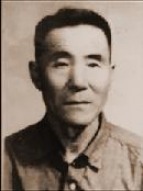
One of Shi Yushan's most talented disciples was Tianjin's Tian Jinzhong. The young Tian jinzhong came from a wealthy family, thus was able to study Martial arts with the best teachers. His first teacher, Shi yushan, was invited by his father at a young age. Another known martial arts teacher was Bajiquan master Wu Xiufeng, who moved to Tianjin in search for a job. At the age of 19 Tian jinzhong started studying Bajiquan in Nankai district from Wu Xiufeng and was accepted as an inner door student.
Master Zhou's teachers, Grandmasters Shen Jia Rui and Sun Zhen Yao, were direct disciples of Grandmaster Tian.
The practice
Jingangbashi's material includes 8 basic hands (ying ba shou), 64 hard hands (Ying-shou), 64 soft hands (Ruan-shou), 8 combined hands form (Lian shou quan), Cotton hand form (Mian zhang quan), Small flood fist (Xiao hong quan), Green Dragon fist (Qing long quan) and a few weapons forms like Spear (Wu-hu Duan-men Qiang), Saber (Jingang Dao), Sword (Qing-Long Jian) and Jingang Da-Dao.
The learning begins with the 8 basic hands which are short forms consisting of one to four moves each which are practiced equally on both sides. After mastering the 8 basic hands, standing pole practice (zhan zhuang) is first introduced and one starts learning the 64 hard hands.
When the student reaches the stage where he is able to manifest the basic explosive power (Fa jing) in the short forms practice, the study of the 64 soft hands begins. These 64 moves are more flowing variations of the 64 hard hands and are the equivalent of combination training in Western Boxing. Most of the 64 soft hands consist of 3-4 moves which predicts the reaction of the opponent and react to it or force the opponent to react in a certain way and create an opening in his defense.
The advanced student learns the flow of body method (Shen fa) through the practice of the basic and advanced forms.
